Gegenpressing: the first six seconds after losing the ball
Losing the ball is not the end of an attack, it is the start of the defence. We look at how the transition moment becomes the sharpest weapon in modern football.
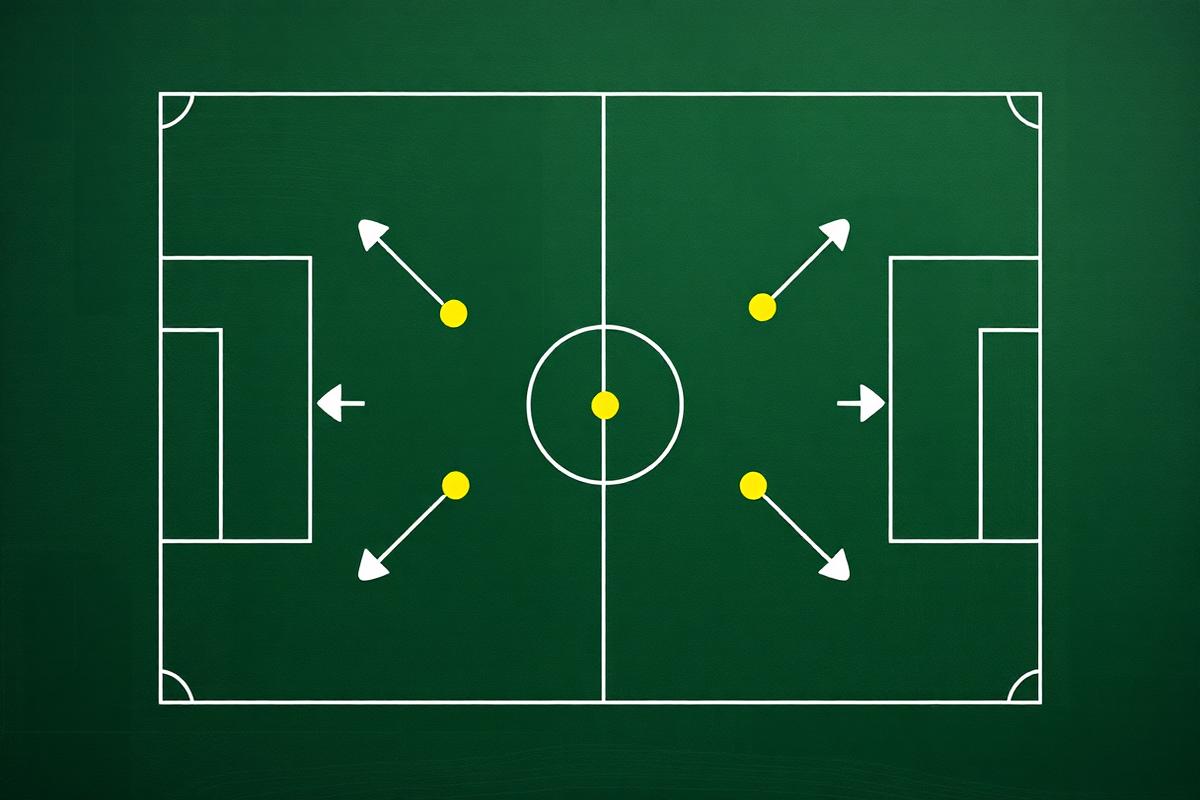
The best moment to win the ball is the moment the opponent has just won it. Their structure is not set, bodies are facing their own goal, and the first touch is almost never perfect. Gegenpressing is the systematic exploitation of exactly that vulnerability.
Why six seconds?
The number is not sacred, but it is useful. Six seconds is the average window in which the team that lost the ball still holds its attacking shape compactly enough for pressure to make sense. After that the opponent has escaped the zone, the lines are stretched, and dropping into a mid block is the smarter option.
Conditions the structure has to meet
- Compactness in attack: at least five players within 25 metres of the ball.
- Balance behind: one player always covering the space behind — the rest defence.
- Defined triggers: a poor first touch, a backwards pass, or a ball into a player facing his own goal.
The most common mistakes
Gegenpressing collapses when it is individual. If the first player jumps and the second stands still, the team is not pressing — it is exposing itself. The other typical error is pressure without closing a passing lane: an aggressive jump that leaves an easy escape into the space between the lines is worse than no pressure at all.
I don't need a playmaker when I have gegenpressing — it is the best playmaker there is.
How to watch for it on video
In the next match, pause the footage at the moment of the turnover and look at just three things: how many players are within ten metres of the ball, which lane is closed, and where the free space is. If the team consistently shuts the same lane, you are watching a rehearsed plan, not improvisation.
Want the analyses first?
Comments (0)
- No comments yet. Be the first to add a tactical observation.